By Fabian Lornspice
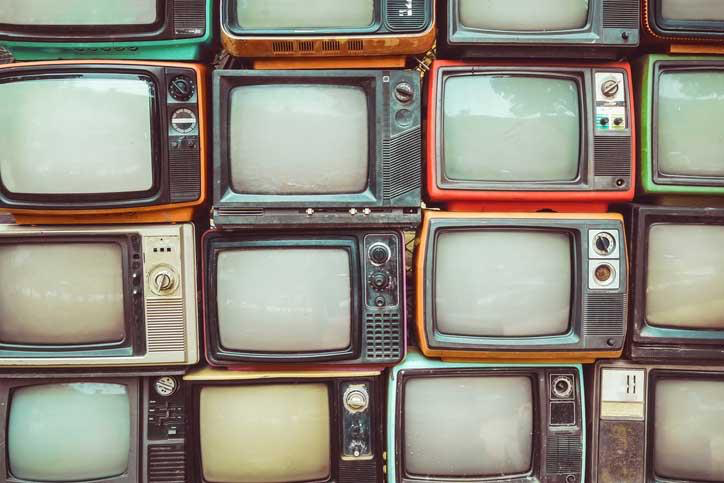
Buying Into New Media
I’m a Luddite when it comes to new movies and TV. After being burned by the appalling final season of Game of Thrones, I have some pretty serious commitment issues with anything the big budget studios churn out. The ‘remake’ epidemic certainly isn’t helping the situation either; spin-offs, extended universes, etc. do absolutely nothing for me. I may be a little stubborn, but modern show writing just feels like the brainchild of private equity nerds and Redditors too much of the time. The tell-tale signs seem to be hollow acting, predictable storytelling, and audience capture—when producers just try to make what they think a sanitized audience wants to see. In all fairness, I can’t say that it’s all bad, it’s just that something or another rubs me the wrong way with new releases. I know what I like, and I tend to stick to it— “it” being the gritty, ambitious, original streak of TV and film projects that came out from the 90s to the early 2010s.
Every once in a while I’ll begrudgingly take a stab at a new series or movie, whether it be on a plane with limited options, or to appease a friendly recommendation. It’s not just the writing that turns me off from the modern stuff, though (again, in the name of fairness, there have been some great scripts that have popped up in recent years). There’s something else that weakens this modern generation of visual entertainment at face value. This nail in the coffin, for me, is the skyrocketing picture quality. That’s right, the new stuff looks too crisp. It’s over-produced. I doubt I’m the first one to bring attention to this, but I can’t be the only one who has noticed it.
Full Steam Ahead
For starters, the nominal price of a television has deflated by around 25% since the 1950’s, while nominal prices for most other household goods have multiplied several-fold—not even accounting for inflation. In real terms, TVs have become ridiculously cheap, and that trend has been most dramatic in just the last 15 years. More and more households are purchasing more and more screens, and those screens are capable of ever-increasing picture quality. Naturally, studios have clambered to squeeze every possible ounce of detail from these hi-tech canvases, but as the proverbial adage goes, “just because you can, doesn’t mean you should.”
I remember being a kid around 2007 and overhearing two adults rave about how impressive YouTube’s streaming quality was—a whopping 360p! Just in the last decade, the norm in online video quality has ratcheted up from 1080p, to 1440p, to 4k and beyond. Today, some studios are experimenting with 8k compatible offerings with frame rates exceeding 60fps. The result is certainly impressive; one can see the individual pores on an actor’s face, stray fibers coming out of their clothing, and each and every detail in their environment. The question nobody seems to be asking is whether or not this relentless sharpening lends itself to telling a better story.
A Bit Much
In many modern shows and films, the actors and environments are so sharply rendered that they can appear surreal and uncanny, almost plasma-like. As someone with human eyes, I am not accustomed to conversations with people who look like a color-corrected pool of hyper-animated gel. So when I see it on a screen, it removes a lot of the immersion. I suspect the law of diminishing returns applies here.
At one point in entertainment history, cameras and film were too primitive to capture the small, subtle expressions on actors’ faces, cues that create much of the subtext underlying important conversations. Things like body language and tonality could go unnoticed, because the technology of the time couldn’t quite convey that subtlety in the finished product. At this point, we were still working our way up the “curve” of emotional salience in film, where better technology translated to a better product. Some time around 1990, however, the technology problem had been reliably solved with better cameras, software, and screens, and these human subtleties could be appreciated—we had reached the crest of the curve. Beyond that point, as we approached 4k UHD dopamine-frying levels of quality, I believe the resulting emotional salience curve not only flattened, but began to arc back downward.
The Oldies Are the Goodies
I’m a broken record when it comes to The Sopranos, but I believe the first season of that show is a great example of what I’m describing. Take the picture quality: the picture and audio are clear and unambiguous, yet ever-so-slightly grainy by today’s standards. The colors appear realistic—somewhat hazy and muted to the human eye. The result feels like real life, especially if you’re like me and have less than perfect vision. It’s clear, but not too clear. I can fully take in whatever is happening on-screen without my animal perception being hijacked by the glint of an earring in the background, or the fine print on a dinner menu in the bottom corner of the shot.
It’s kind of like a dream in the way that real life is like a dream. We can “see” what we are focusing on, but the whole picture before us is never absolute. It is a halo of clarity that gets a little fuzzy around the boundaries. When emotions flare in real life, things like the texture of the carpet become irrelevant, just as their visual obscurity in S1 of The Sopranos reflects. The production quality captures the visceral essence of a moment, but little else.
Now compare that to something like White Lotus, or pretty much anything put out by the Amazon, Netflix, Peacock mega-studios of today. The picture looks technically amazing, yet I am not compelled. I am unable to suspend disbelief in the same way, because I am made hyper-aware that I am watching actors—rather than characters, who are acting—rather than living their lives. The picture is absolute in clarity in a way that defies the logic of how stories are meant to be told. There is so much visual stimulation that it detracts from the narrative. The imagination is not engaged in the same way, because there is nothing for the imagination to fill in. Everything is visible, over-saturated and over-accentuated right on down to the props and the extras. The imagination is out of a job.
The Verdict
A story is something we can never directly interface with, so we need our imagination to jump in and project the narrative, the characters, and the environment onto the walls of our mind. We do this in just the same way with how we experience our own lives, we never experience them in a raw and absolute sense (see Plato’s Allegory of the Cave). This involvement with the imagination is what brings stories to life, giving them some emotional purchase that is unique in the eye of the beholder. Many modern studios are missing the point here, taking something ancient but familiar and over-engineering it into something uncanny.
Like any good Luddite, I suggest that Hollywood un-jump the shark when it comes to picture quality. Return to more realistic standards of picture quality and frame rates, and give the imagination some traction once again. Then maybe they can address some of their writing problems, but that’s a topic for another day.
Leave a Reply